
Zambia
In Zambia, more than half (61%) of the population of 19.6 million live below the international poverty line, earning less than $2.15 per day.
While Zambia is experiencing growth in urban areas, three-quarters of the poor live in rural areas, and the future for them is much more uncertain.
Ripple Effect works with regional partner the Zambian Rainbow Development Foundation (ZRDF), to support families living in the Mkushi and Luano Districts in the central province of Zambia.
The ZRDF and Ripple Effect approaches work together to focus on:
- Sustainable agriculture
- Enterprise
- Education
- Health
Challenges and opportunities for Ripple Effect and ZRDF
Since 1960, the average yearly temperature in Zambia has risen by far greater than the global average. Rainfall in the rainy season has decreased every decade.
There are approximately 1.5 million smallholder farmers in Zambia who rely on crops as a source of food and income.
Climate shocks and changes in weather patterns make it difficult for farmers to plan planting and harvesting times which leads to crop failure, hunger and poverty.
Rainfall is especially important as Zambia’s staple produce, cassava and maize, are both rain-fed crops.
Droughts caused by the climate crisis has increased the number of climate refugees migrating to the Central Province where ZRDF works. This has led to an increased strain on environmental resources that were already struggling to sustain the current population.
The sustainable farming practices that Ripple Effect shares in our self-help groups are climate-positive, meaning they support nature to provide immediate impact against climate shocks, and work long-term to alleviate and mitigate environmental harm.
Over 90% of women in rural areas are employed in the informal agricultural sector but they have decreased power and agency due to gender inequality.
- Due to patriarchal behaviors and power imbalances, women have fewer opportunities to participate in key decision-making positions and less access to resources.
Participation of women in decision-making positions remains low with women currently representing 20.5% of political positions in the country. All these factors result in low female representation in formal employment, poor access to social services, and high levels of teenage pregnancy, child marriage, and intimate partner violence.
Ripple Effect and ZRDF are tacking gender equality by integrating it into our programs. ZRDF’s Menstrual Health project supported 1,697 young girls in 2023, enabling them to remain in education by improving access to sanitary products, suitable sanitation and health education for boys and girls.
- According to the Education Policy and Data Center, in 2018 13% of Zambian primary school-age children (7-13) were out of school. However, this disproportionately affects poor children; 25% of poor children are out of school.
Zambia has a lack of safe and suitable schools. The government has extended the Education For All policy from primary education to include early childhood and secondary education as well as primary. Demand for schools and teachers is greater than ever, without the resources and facilities to accommodate them.
From 2008 to 2023, ZRDF has built 12 schools, 53 teachers’ houses and a dormitory across 18 communities and constructed 87 toilets for schools to provide clean water and hand washing facilities for both girls and boys. This encourages children, especially girls, to attend school regularly and remain longer in education.
Due to the school infrastructure improvements and teacher training programs, the number of trained teachers has increased from 24 to 153 over the last decade, and pupil numbers have risen from 640 to 8,200.
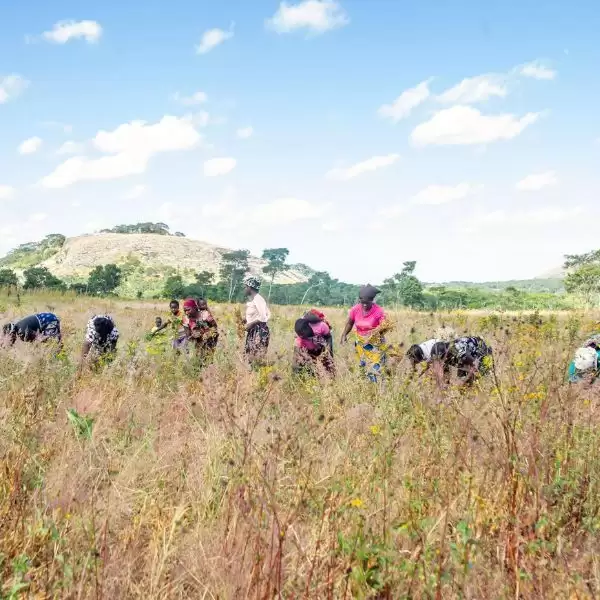
Over the last 10 years, families working with ZRDF have:
Seen their income rise from $37 per year to $524. Increased their meals from 1 to 3 meals a day. Been able to send their children to school with a x13 increase in school attendance.
How our work support Zambia’s sustainable development goals and national targets
Zambia’s Eighth National Development Plan provides an overview of Zambia’s strategy for sustainable development for the period 2022-2026 with an aim to eradicate poverty and inequality.
It focuses on four strategic development areas: economic transformation and job creation; human and social development; environmental sustainability and good governance environment.
Ripple Effect supports these by:
- Economic Transformation and Job Creation
Ripple Effect supports the building of micro, small and medium enterprises through our Business Enterprise projects.
- Human and Social Development
Ripple Effect supports this through inclusive programs for young people, where they develop skills for the workplace and through the education shared in our self-help groups.
- Environmental Sustainability
Ripple Effect focuses on sustainable farming techniques, such as agro-forestry, to ensure farming has a positive impact on people and the planet.
- Good Governance Environment
Ripple Effect works closely with community leaders to ensure our projects are carried out effectively. RE considers the needs of the community when recruiting peer farmers, making sure those from vulnerable groups are placed in leadership roles to ensure equitable and lasting governance.
Our partnerships (lifted from Zambia Impact Report)
- innocent foundation
- JA Clark Trust
- JJ Charitable Trust
- The Egmont Trust
- ActionAid Zambia
- Village Water Zambia
- Delegation of the European Union to Zambia
- Total Land Care
- The Reed Foundation
- Individual supporters and volunteer ambassadors
Contact
For more information, contact Steven Kleiber, Vice President and U.S. Lead, Ripple Effect U.S.
Email: steven.kleiber@rippleeffectus.org
Phone: (330) 990-8935
Sign up to hear more
Want to hear good news stories from Africa, get involved in fantastic fundraising and be part of exciting events? Fill out your details below and we will keep you updated by email.
By providing your email address above, you are confirming that you would like for Ripple Effect U.S. to contact you by email. We will use your email to let you know about news, events, fundraising and appeals. We will never sell or trade your details. Read more about how we value your privacy. You can unsubscribe at any time by clicking the unsubscribe link in any email we send.